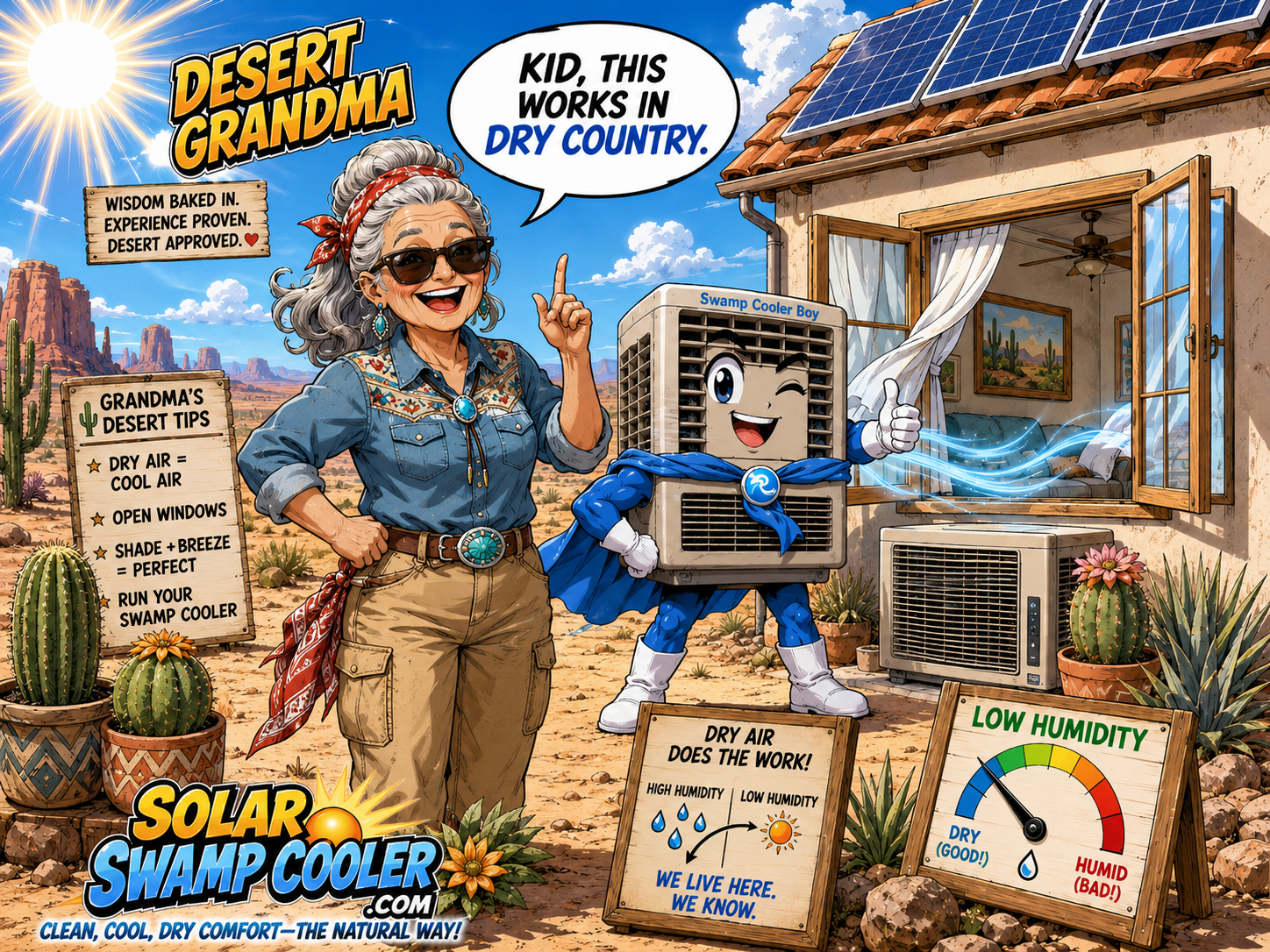
Desert Grandma’s airflow lesson

Window Ventilation Explainer

A swamp cooler is not sealed-window AC. It brings fresh cooled air into the house, and the house needs a path for warmer air to leave. Cool air in. Warm air out.

The big mistake

Do not run a swamp cooler like sealed-window AC.

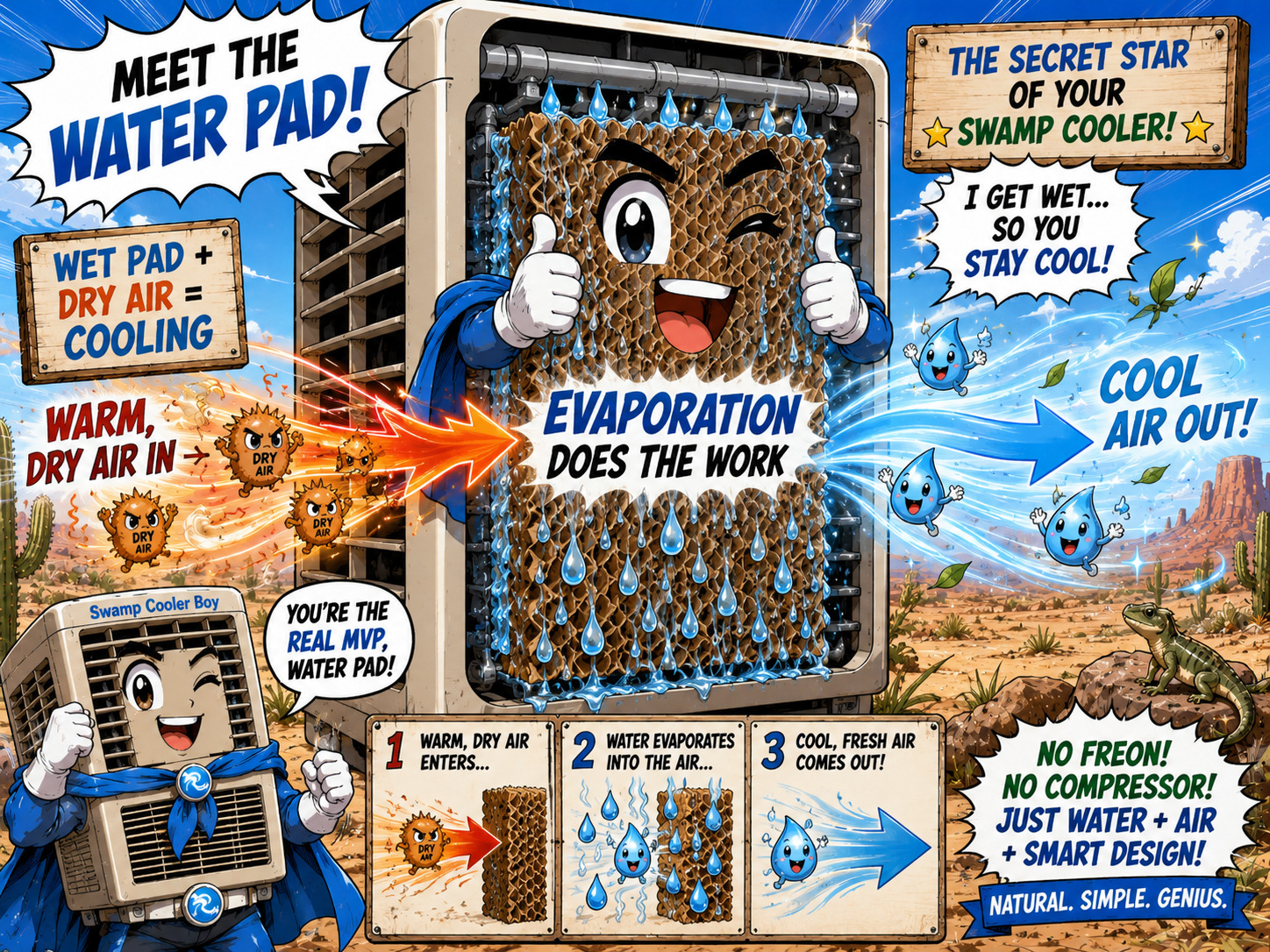
Compressor air conditioning usually works with closed windows and recirculated indoor air. A swamp cooler is different. It pulls outside air through a wet pad and pushes that fresh cooled air into the home.

If there is no exit path, the breeze gets trapped. Desert Grandma calls that “a box of confused air.” The cooler needs properly opened windows or vents so air can travel through the building.

  • Cool fresh air enters from the swamp cooler.
  • Warmer indoor air exits through selected windows or vents.
  • Airflow direction helps distribute comfort through the home.
  • Closed-window operation can reduce comfort and create pressure problems.
Cutaway house showing cool air entering from a swamp cooler and warm air exiting through open windows.

The airflow chain

Cool air in. Warm air out. Breeze keeps moving.

The ventilation rule is simple enough for a comic panel and important enough for real-world comfort. A swamp cooler works best when the house has a planned airflow path.

Cool air enters

The fan pulls outdoor air through the wet pad and sends fresh cooled air inside.

Air crosses the room

The breeze moves through hallways, rooms, and open interior paths.

Warm air exits

Selected windows or vents let warmer air leave the house.

Comfort circulates

The system keeps breathing instead of pressurizing a sealed box.

Desert Grandma explains cracked windows and real-world swamp cooler operation.

Desert Grandma says

Crack the right windows.

The goal is not random open windows everywhere. The goal is a useful path: air comes in from the cooler and leaves where you want the airflow to travel.

  • Open the correct windows or vents.
  • Use airflow to pull comfort through occupied areas.
  • Adjust openings to balance the house.
Read Grandma’s Lesson
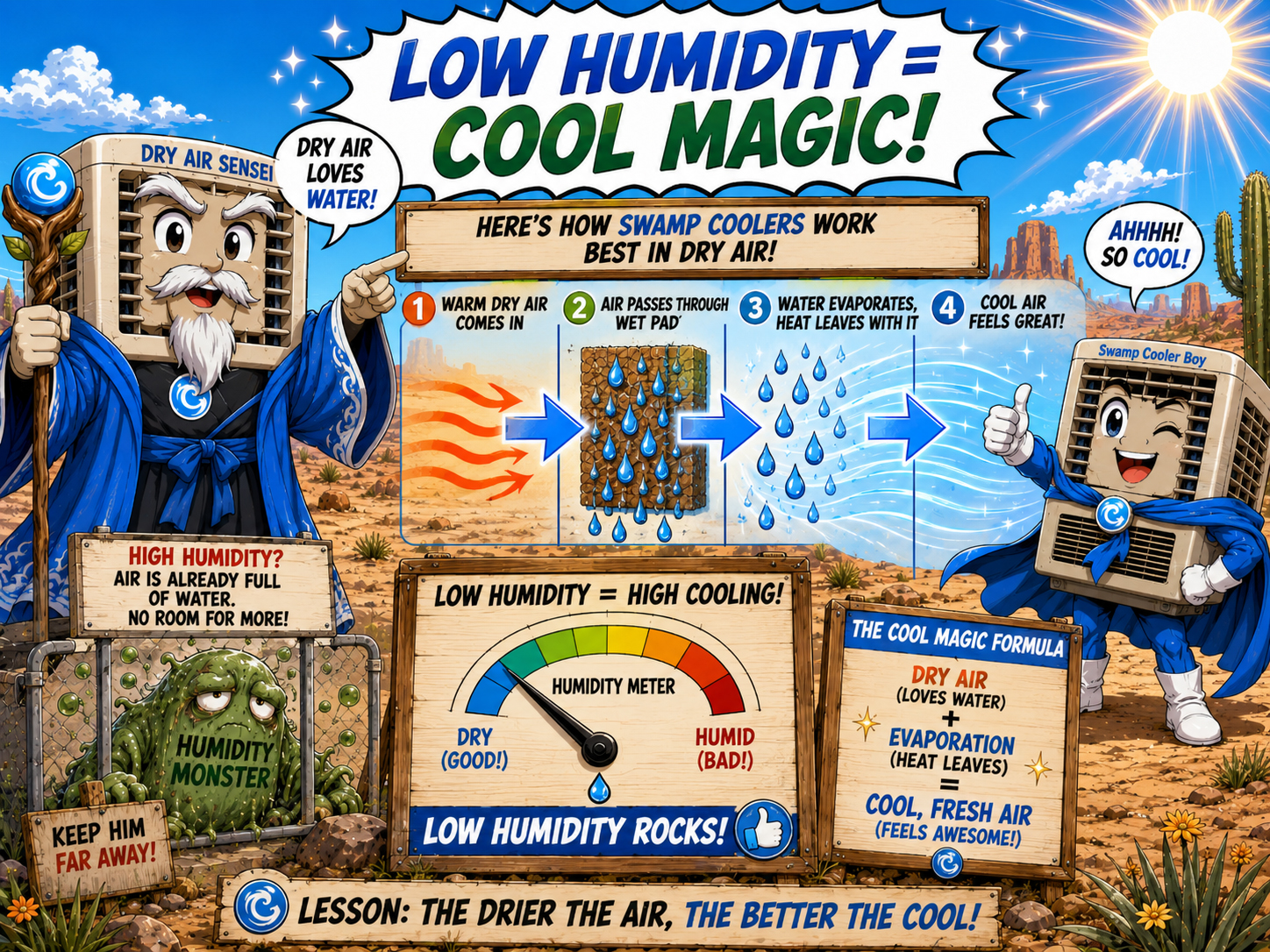
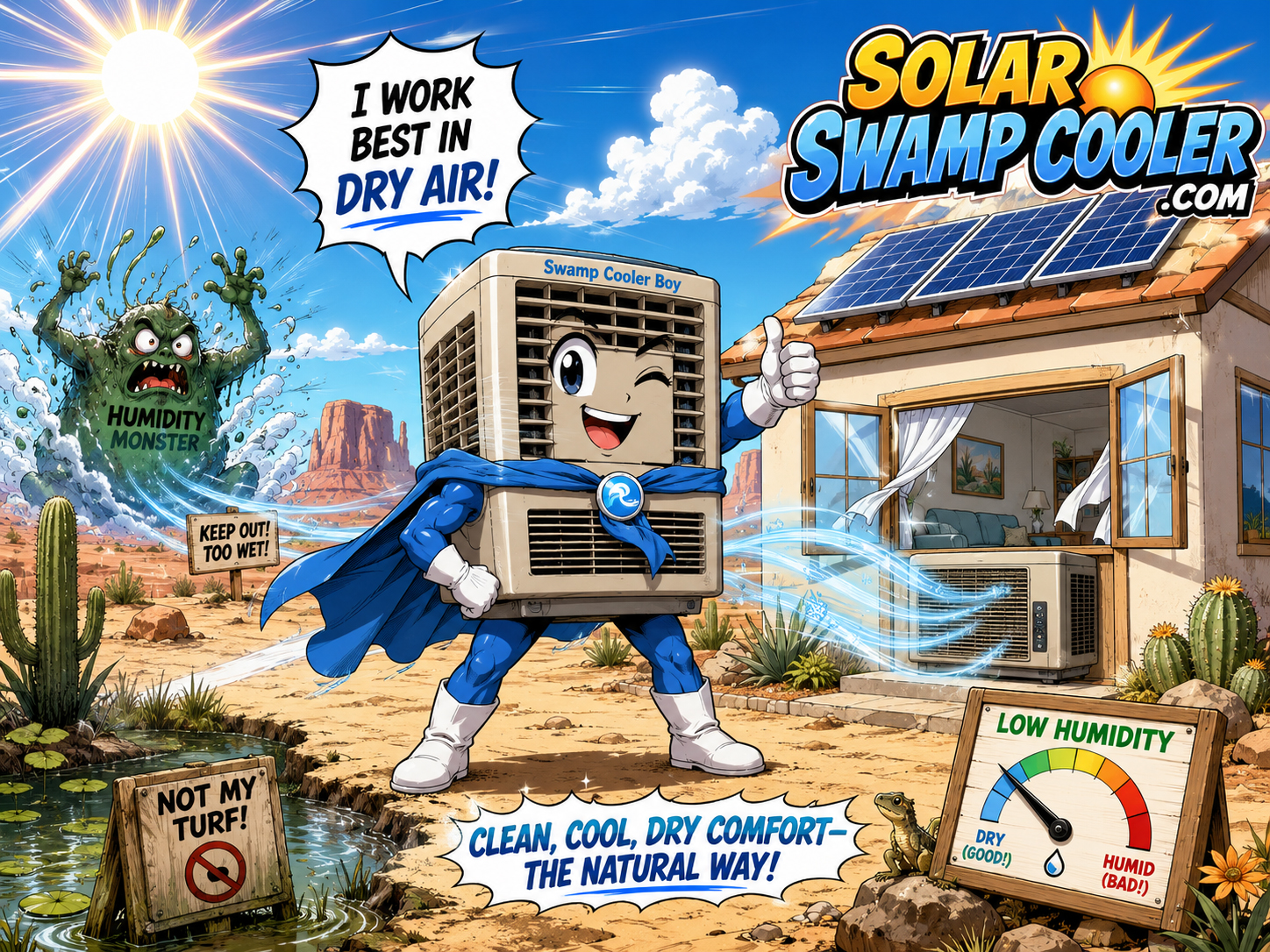
Dry Air Sensei explains why low humidity makes evaporative cooling work.

Dry Air Sensei says

Airflow still needs dry air.

Window ventilation helps move the breeze, but it does not override the climate rule. If the air outside is humid, the cooler still struggles.

  • Low humidity helps evaporation.
  • High humidity weakens cooling.
  • Airflow cannot turn sticky air into desert air.
Low Humidity Magic
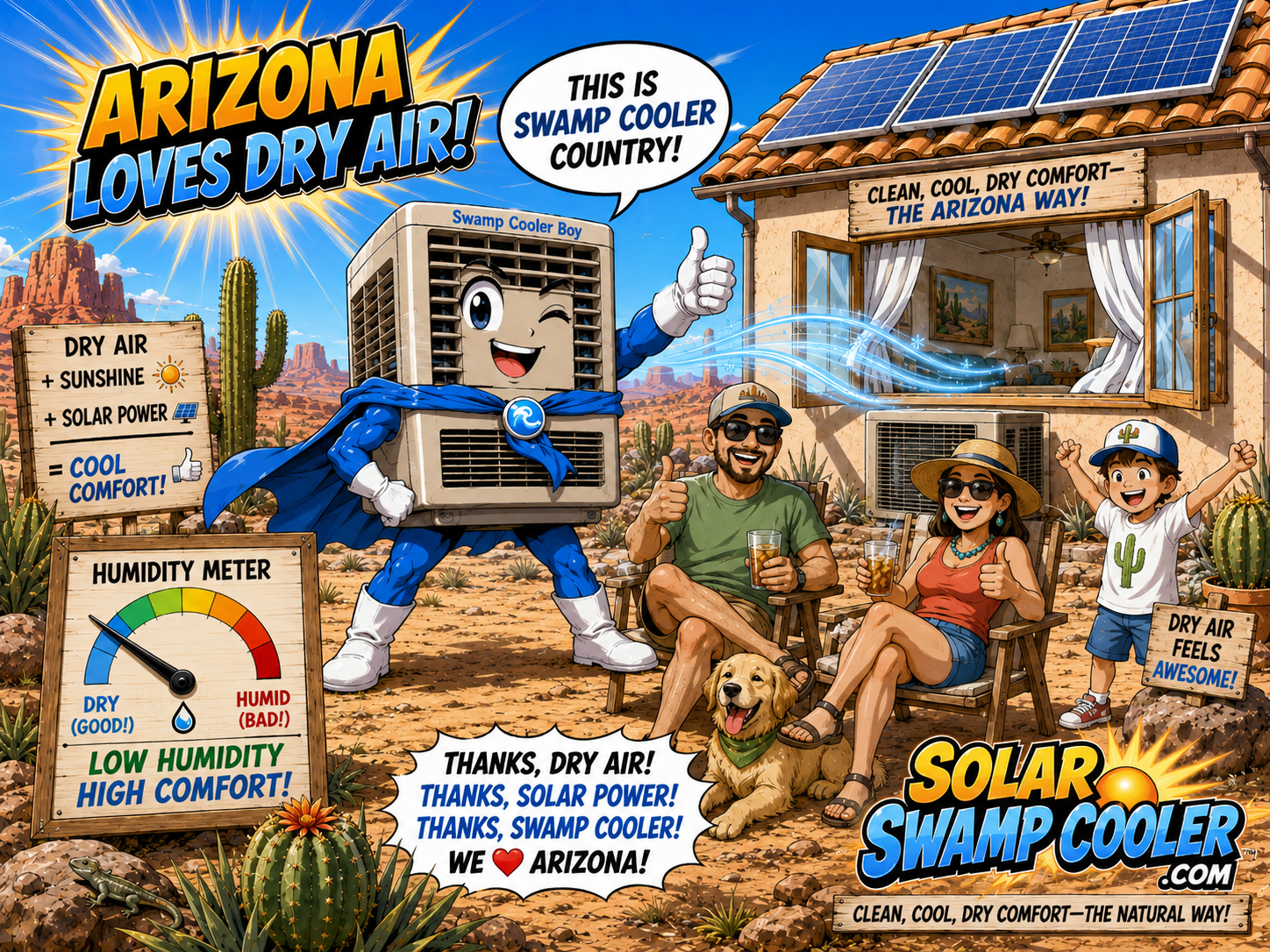
Swamp Cooler Boy cooling a desert home with open windows and solar panels.

The correct mental model

A swamp cooler helps the house breathe.

Think of the home as a path, not a sealed container. A swamp cooler introduces fresh cooled air, and properly opened windows or vents provide the exit.

That is why the homeowner’s behavior matters. The equipment can be fine, the dry air can be helpful, and the pad can be clean — but if the breeze has nowhere to go, the system feels wrong.

Fresh air in Warm air out House breathes Setup matters

Wrong-way warning

What happens when you trap the breeze?

The most common homeowner confusion is expecting a swamp cooler to behave like AC. Closed-window habits can make a good evaporative cooler feel disappointing.

Pressure builds

The cooler pushes air in, but the home has too little exit path.

Airflow stalls

The breeze does not move cleanly through the areas that need comfort.

Rooms feel uneven

Some rooms may feel breezy while others stay warm or stuffy.

The cooler gets blamed

The real issue may be operation, airflow path, or climate.

Arizona dry air success with swamp cooler and open-window comfort.

Good airflow example

Dry desert home, open path.

In a dry climate, a properly operated swamp cooler can move fresh cooled air through the home. The open-window strategy is not a flaw — it is part of the design.

Dry air Open path Fresh comfort
Arizona Success
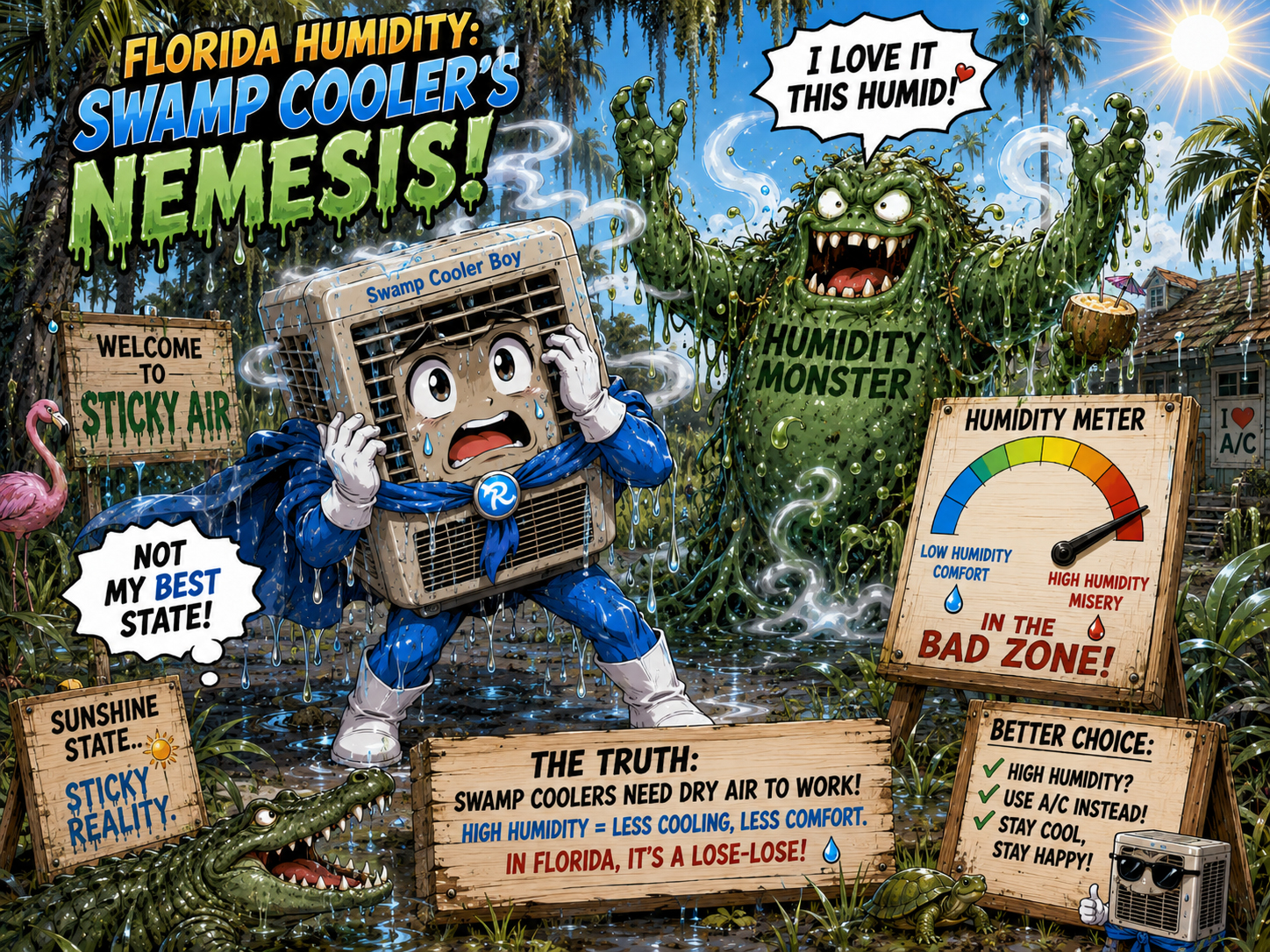
Florida humidity fail showing Humidity Monster defeating Swamp Cooler Boy.

Bad climate example

Humid air still wins.

Opening windows does not save a swamp cooler in the wrong climate. If the outside air is sticky, the system is bringing sticky air inside.

High humidity Weak evaporation Wrong tool
Humidity Warning

Ventilation table

How to think about windows and airflow.

Use this as a homeowner-friendly concept guide. Follow manufacturer instructions and local professional guidance for actual equipment operation.

Situation What it means Manga translation Homeowner takeaway
Windows closed tightly Air has limited exit path. The breeze gets trapped. Do not run it like sealed-window AC.
Selected windows cracked Air can travel through the home. Desert Grandma approves. Use openings to create useful airflow.
Too many random openings Air may short-circuit or miss target rooms. The breeze gets confused. Balance airflow rather than guessing wildly.
Humid outdoor air The cooler brings in air that is already moisture-heavy. Humidity Monster enters through the window. Climate still decides whether the cooler makes sense.
Dry outdoor air Evaporation and fresh-air movement can work together. Swamp Cooler Boy gets his hero moment. Dry climate plus airflow is the winning combination.

This page is educational and comedic. It is not HVAC, electrical, solar, plumbing, health, mold-remediation, or building-design advice. Follow manufacturer instructions and qualified professional guidance for actual equipment selection, sizing, installation, ventilation, operation, and maintenance.

The airflow punchline

A swamp cooler does not just cool air. It moves air.

Let the breeze travel. Give it a path. Keep the pad clean. Check the climate. That is how Swamp Cooler Boy avoids becoming a confused box with a fan.