Best
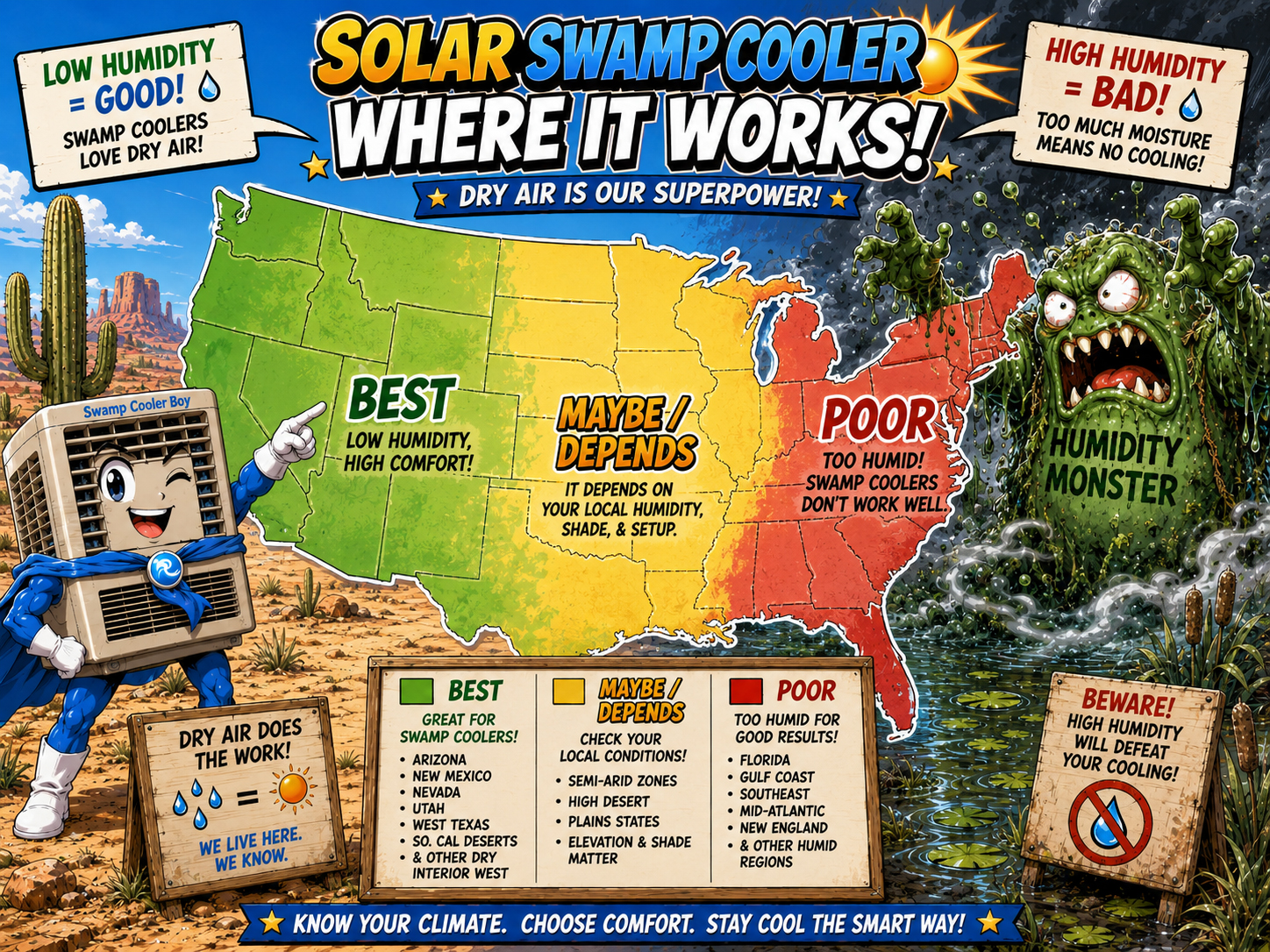
Dry, low-humidity regions where evaporation can do real cooling work. These are the places where Swamp Cooler Boy stands tall.
Swamp coolers are not magic boxes. They are climate machines. They shine where the air is dry, they struggle where the air is wet, and they become comedy gold when someone tries to use them in the wrong place.
The dry-air rule
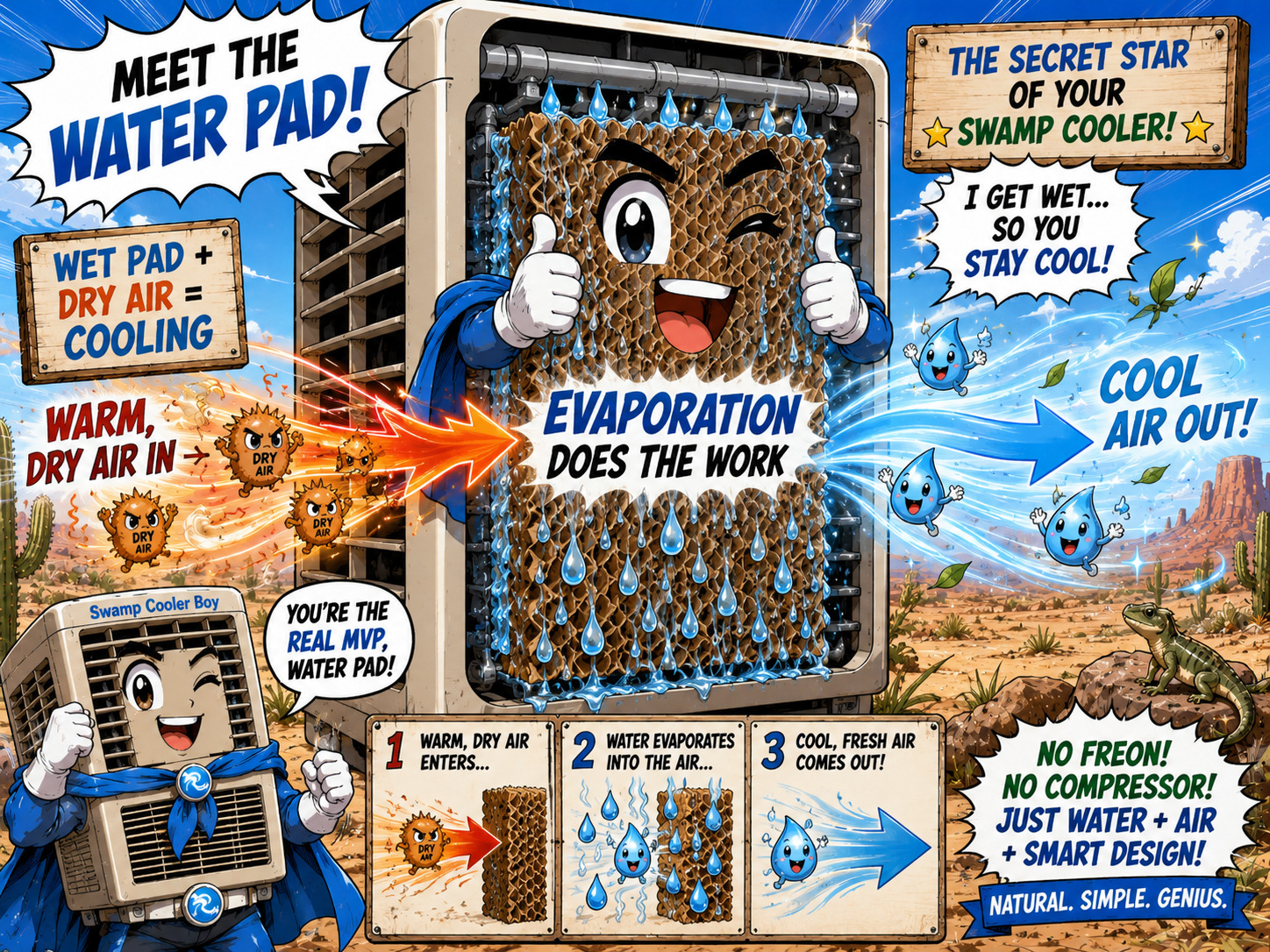
A swamp cooler works by pulling hot outside air through a wet pad. In dry air, water evaporates easily and carries heat away. In humid air, the air is already loaded with moisture, so evaporation slows down and cooling performance drops.
That means the question is not “Do you like cool air?” Everyone likes cool air. The real question is: Does your local climate give the cooler dry air to work with?
Three climate zones
SolarSwampCooler.com teaches this with manga because the idea needs to be remembered. Swamp Cooler Boy points west. Humidity Monster dances in the Southeast.
Dry, low-humidity regions where evaporation can do real cooling work. These are the places where Swamp Cooler Boy stands tall.
Semi-arid or mixed regions where results depend on local humidity, elevation, season, daily weather, building design, shade, and ventilation.
Humid climates where the air is already full of water. That is where a swamp cooler can add moisture without delivering enough cooling comfort.
Success example
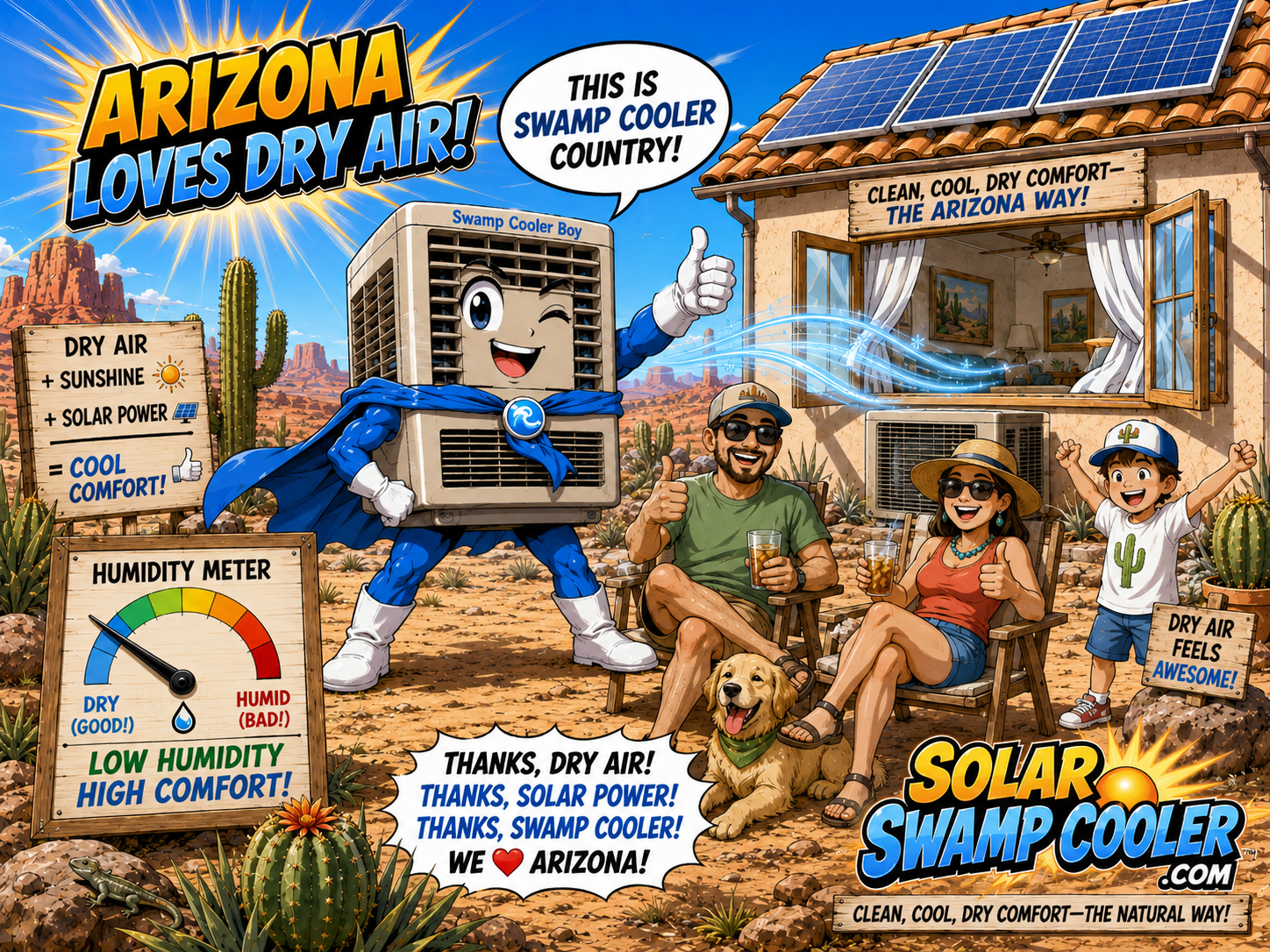
Arizona is the cleanest comedy lesson. Hot sun, dry air, open windows, solar panels, and a happy swamp cooler all point in the same direction: daytime cooling with evaporative logic.
Failure example
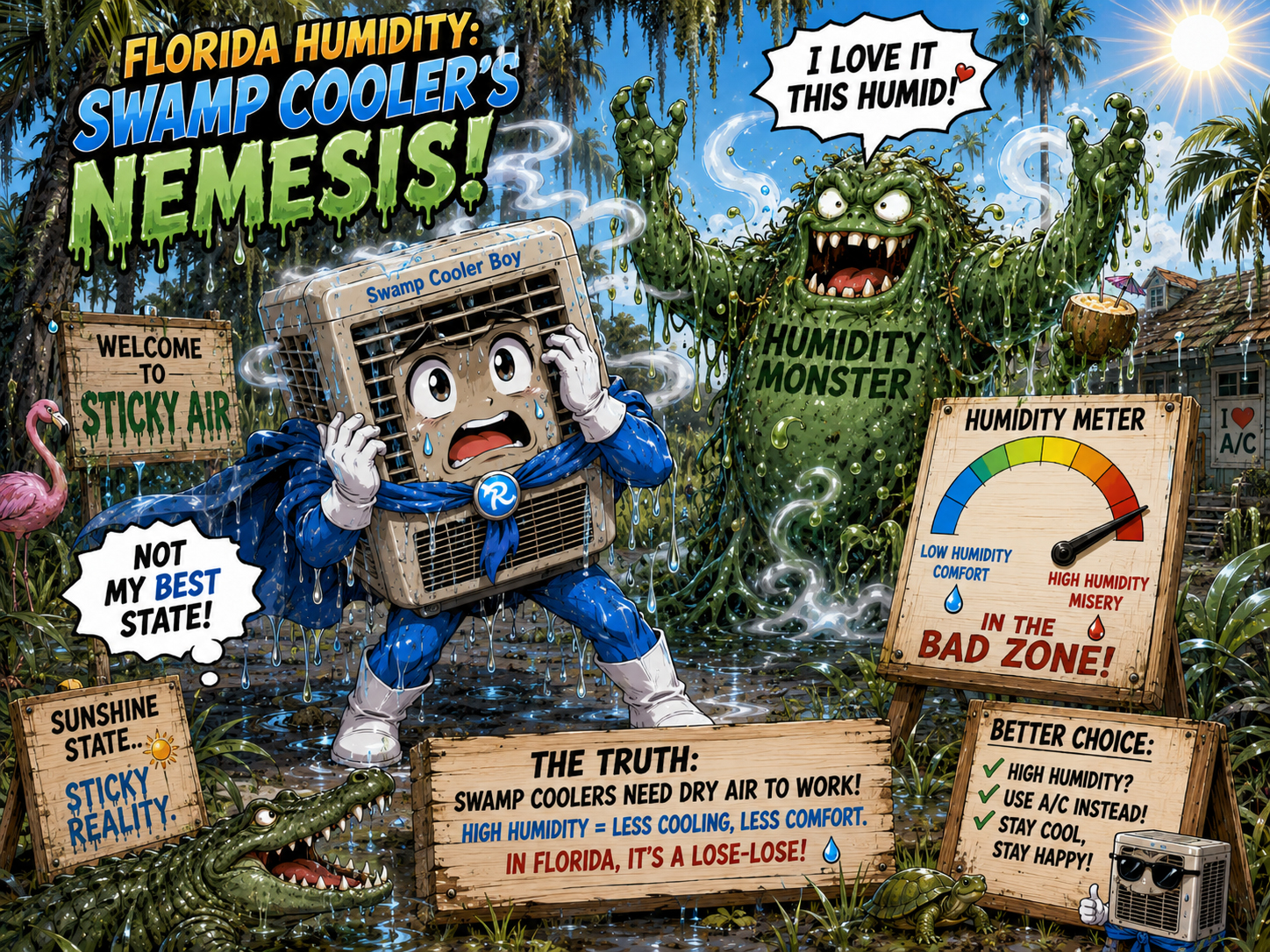
Florida is the warning poster. The air is often already wet, so evaporative cooling has little room to work. Swamp Cooler Boy gets nervous. Humidity Monster orders a coconut drink.
Homeowner test
The answer is not just the state name. Local weather, microclimate, roof exposure, ventilation, and homeowner expectations all matter.
Low relative humidity gives evaporation more cooling potential. High humidity is the red flag.
Swamp coolers need airflow. Cool air comes in and warmer air must leave.
Pads, pans, water flow, draining, and cleaning are part of the system.
In mixed climates or extreme heat, refrigerated AC may still be needed for backup or specific comfort goals.
Why the dry zone matters
Dry Air Sensei’s lesson is the heart of the site: dry air is “hungry” for moisture. When that air moves through a wet pad, evaporation can carry heat away.
That is why the best map zones are not random. They are places where the air often gives the machine the physics it needs.
| Zone | Climate clue | Comic character | Practical takeaway |
|---|---|---|---|
| Best | Hot and dry; low humidity; evaporation has room to work. | Swamp Cooler Boy gives a thumbs-up. | Evaporative cooling may be a strong fit when properly sized and maintained. |
| Maybe / Depends | Humidity changes by season, elevation, weather, or microclimate. | Dry Air Sensei asks for local data. | Check local humidity patterns and homeowner comfort expectations. |
| Poor | Sticky air; humid summers; limited evaporation. | Humidity Monster laughs. | Refrigerated AC is usually the better cooling tool. |
This page is educational and comedic. Actual performance depends on local weather, equipment sizing, ventilation, water quality, installation quality, maintenance, building envelope, and homeowner comfort goals.
The one-line lesson
Put Swamp Cooler Boy in dry country and he becomes a hero. Put him in sticky air and the Humidity Monster gets the punchline.