The secret star
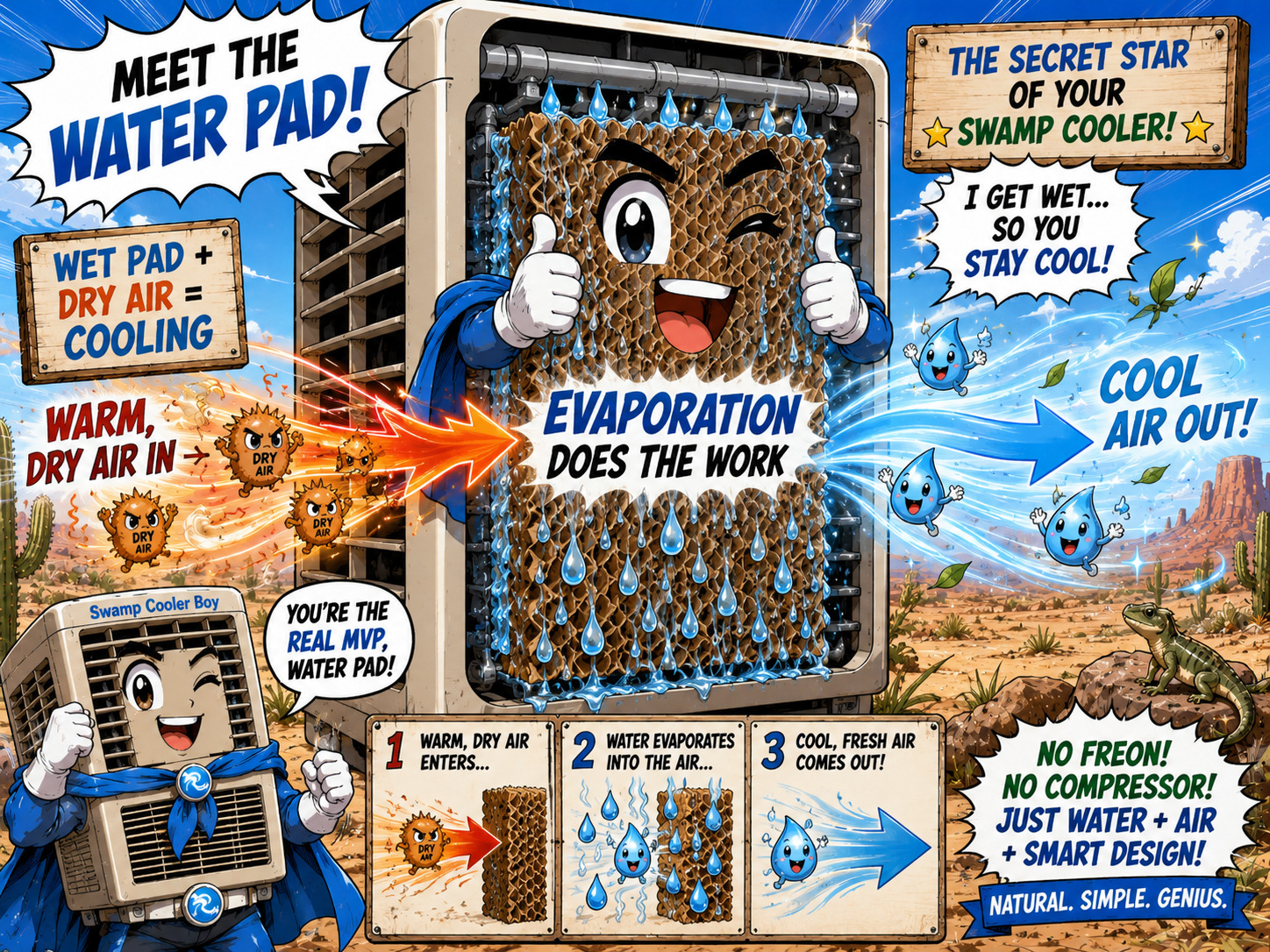
Meet the Water Pad.
The pad is where the story happens. Air passes through a wet surface, water evaporates, and cooler air leaves the pad. The pad is not glamorous, but in this manga it gets the superhero lighting it deserves.
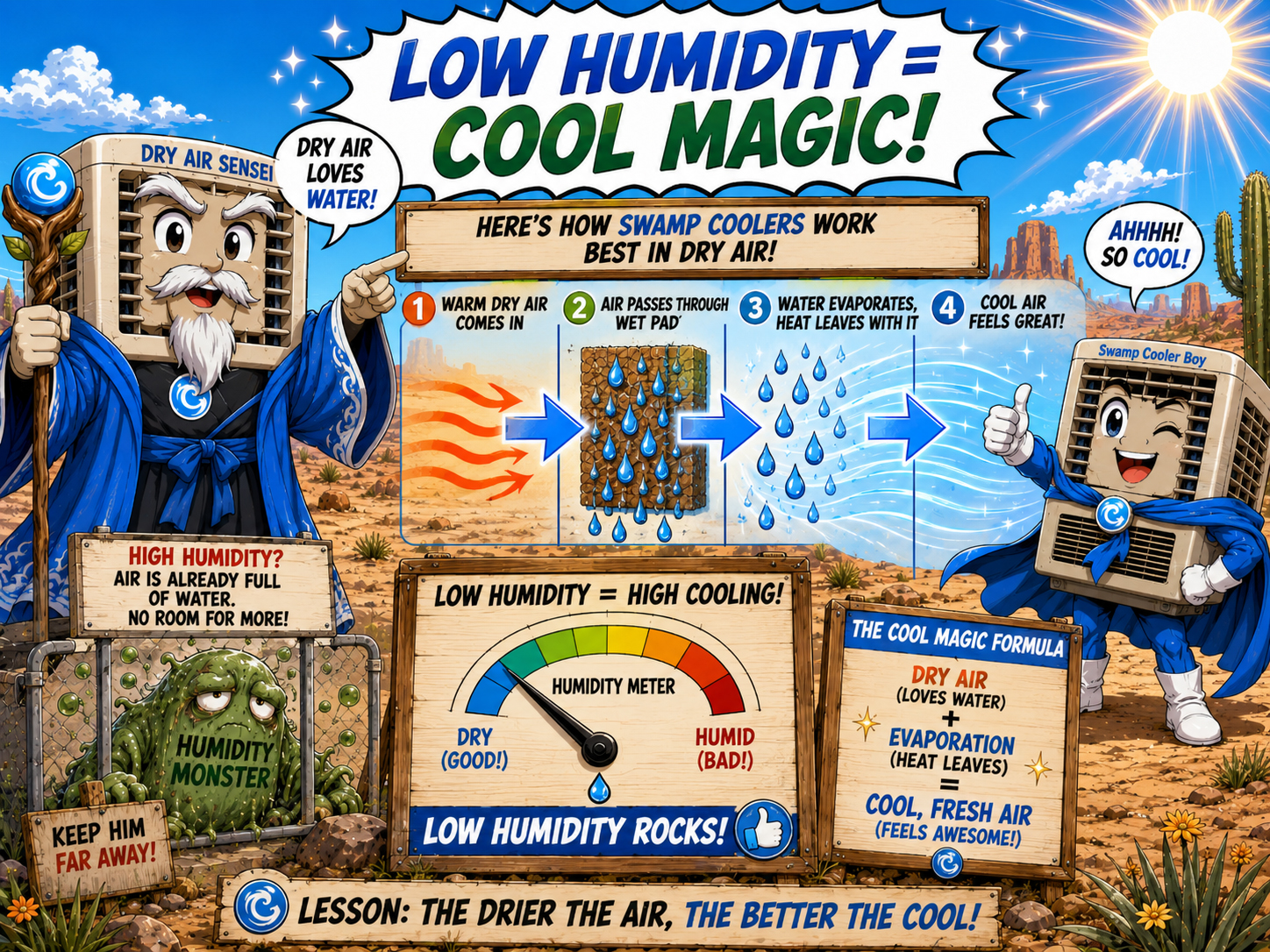
Swamp coolers work because dry air is thirsty. When hot dry air moves through a wet pad, water evaporates, heat leaves with the evaporation, and cool fresh air moves into the room.
The simple science
That is the whole secret. In low-humidity climates, outside air has room to absorb moisture. When that air passes through a wet evaporative pad, some of the water turns into vapor. That evaporation uses heat, so the air leaving the pad is cooler.
Dry Air Sensei calls it “cool magic,” but the magic is really evaporation, airflow, and climate working together. Swamp Cooler Boy only becomes a hero when the air gives him room to do the trick.
Four-step manga physics
The best homeowner explanation is visual. The system is not a mystery box. It is a wet pad, a fan, water flow, outdoor air, and the right climate.
The fan pulls outside air into the cooler. Dry air is the hero ingredient.
Water is distributed through the pad so the passing air meets a wet surface.
Some water changes into vapor. That phase change carries heat out of the air stream.
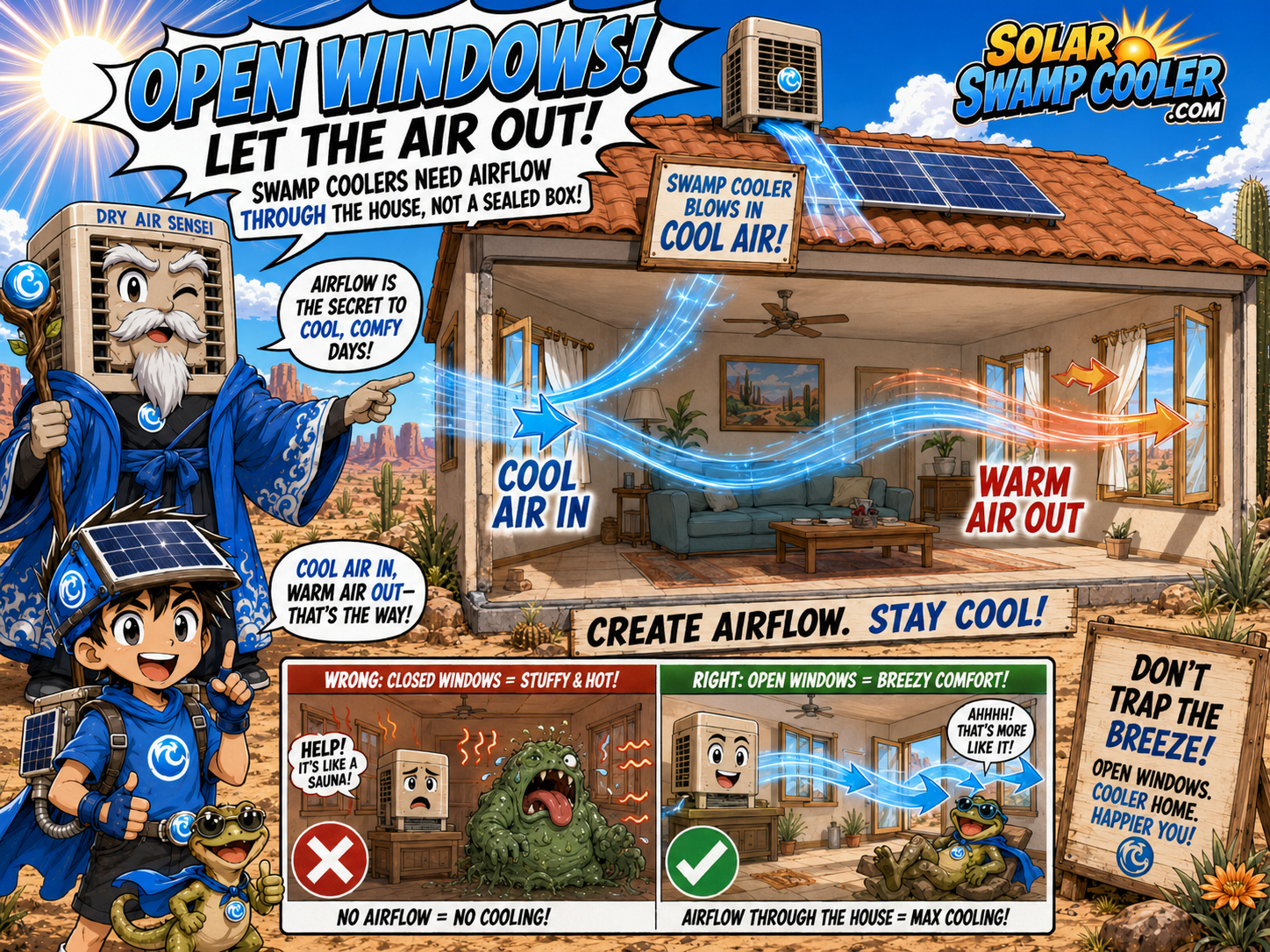
Fresh cooled air enters the home and pushes warmer indoor air out through open windows.
The secret star
The pad is where the story happens. Air passes through a wet surface, water evaporates, and cooler air leaves the pad. The pad is not glamorous, but in this manga it gets the superhero lighting it deserves.
Air must move
A swamp cooler is not a sealed-window AC system. It brings fresh air in and needs a path for warm air to leave. Open windows are part of the comfort strategy.
Dry Air Sensei’s rule
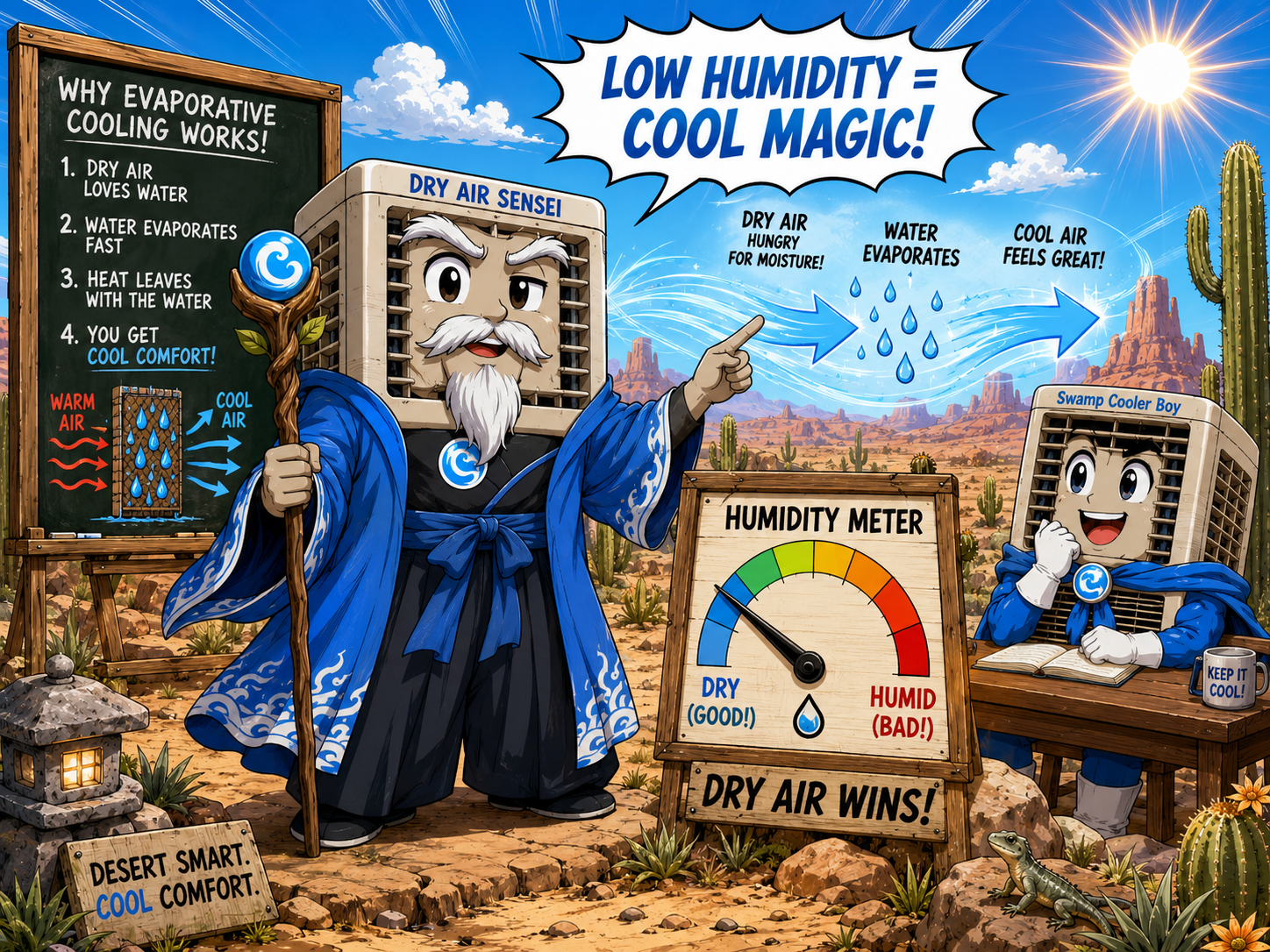
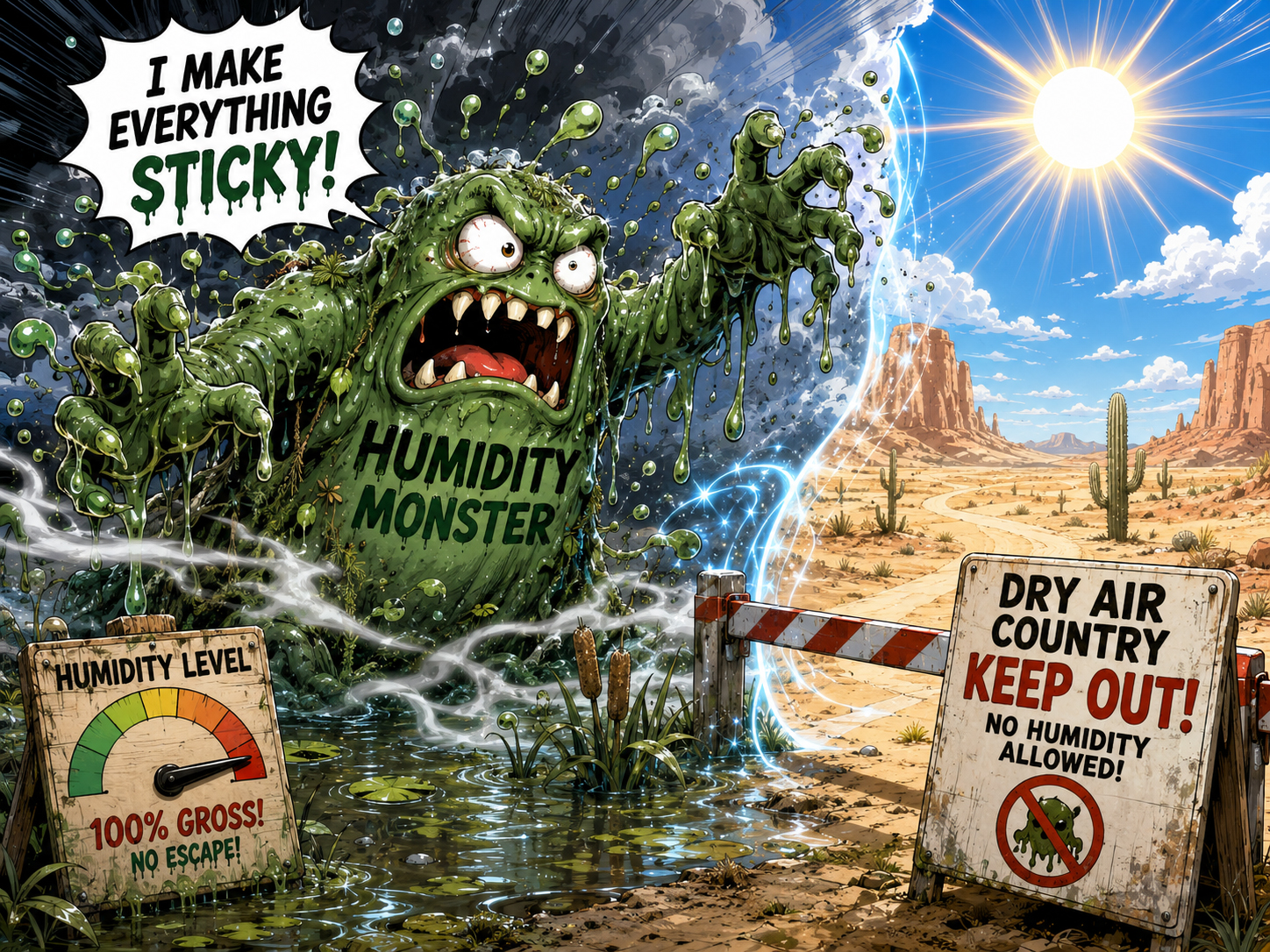
In dry climates, evaporation can happen quickly. In humid climates, the air is already carrying moisture, so it cannot absorb much more.
That is why Swamp Cooler Boy is a desert hero and not a swamp hero. The name is funny because the equipment is happiest in the opposite place.
Good
Dry air can absorb more water vapor. That gives evaporation room to carry heat away.
Depends
Some climates have dry days and humid days. Performance can swing with weather and season.
Bad
Humid air is already wet. Evaporation slows, cooling drops, and indoor comfort can feel worse.
Why humidity ruins the joke
If the air is already loaded with water vapor, the cooler has less evaporation to work with. That is why humid places often need refrigerated air conditioning instead of evaporative cooling.
The manga villain is a simple memory tool: if Humidity Monster is already in the room, Swamp Cooler Boy is not going to have a good day.
| Condition | What happens | Manga translation | Homeowner lesson |
|---|---|---|---|
| Low humidity | Air can absorb moisture; evaporation is stronger. | Dry Air Sensei smiles. | Evaporative cooling may be a strong fit. |
| Wet pad | Air contacts water, and evaporation can cool the air stream. | The Water Pad becomes the MVP. | Pad condition and water flow matter. |
| Open airflow path | Fresh cool air enters and warmer air exits. | Desert Grandma opens the window. | Do not run it like sealed-window AC. |
| High humidity | Air cannot absorb much more moisture; cooling drops. | Humidity Monster wins. | Use caution; AC may be the better tool. |
This page is educational and comedic. Actual performance depends on local weather, equipment sizing, ventilation, pad condition, water quality, installation quality, and maintenance.
The final lesson
SolarSwampCooler.com makes the science funny so homeowners remember the rule: dry air helps the cooler, humid air hurts the cooler, and the water pad only becomes magic when the climate cooperates.