Humidity Monster warning zone

Where They Do Not Work

Swamp coolers are heroes in dry air. In sticky air, they become the joke. This page is the friendly warning poster: do not ask an evaporative cooler to fight a climate where the air is already full of water.

The sticky-air problem

High humidity steals the cooling trick.

Evaporative cooling depends on evaporation. When outside air is dry, water can evaporate into that air and carry heat away. When outside air is already humid, there is much less room for more moisture, so the cooling effect drops.

That is the whole villain arc. In humid climates, a swamp cooler can add moisture without delivering enough comfort. Swamp Cooler Boy starts sweating. Humidity Monster starts laughing.

  • Humid air is already carrying moisture.
  • Evaporation slows down when the air is saturated or near saturated.
  • Adding moisture indoors can make the space feel sticky instead of comfortable.
  • Refrigerated air conditioning is usually the better cooling tool in humid regions.
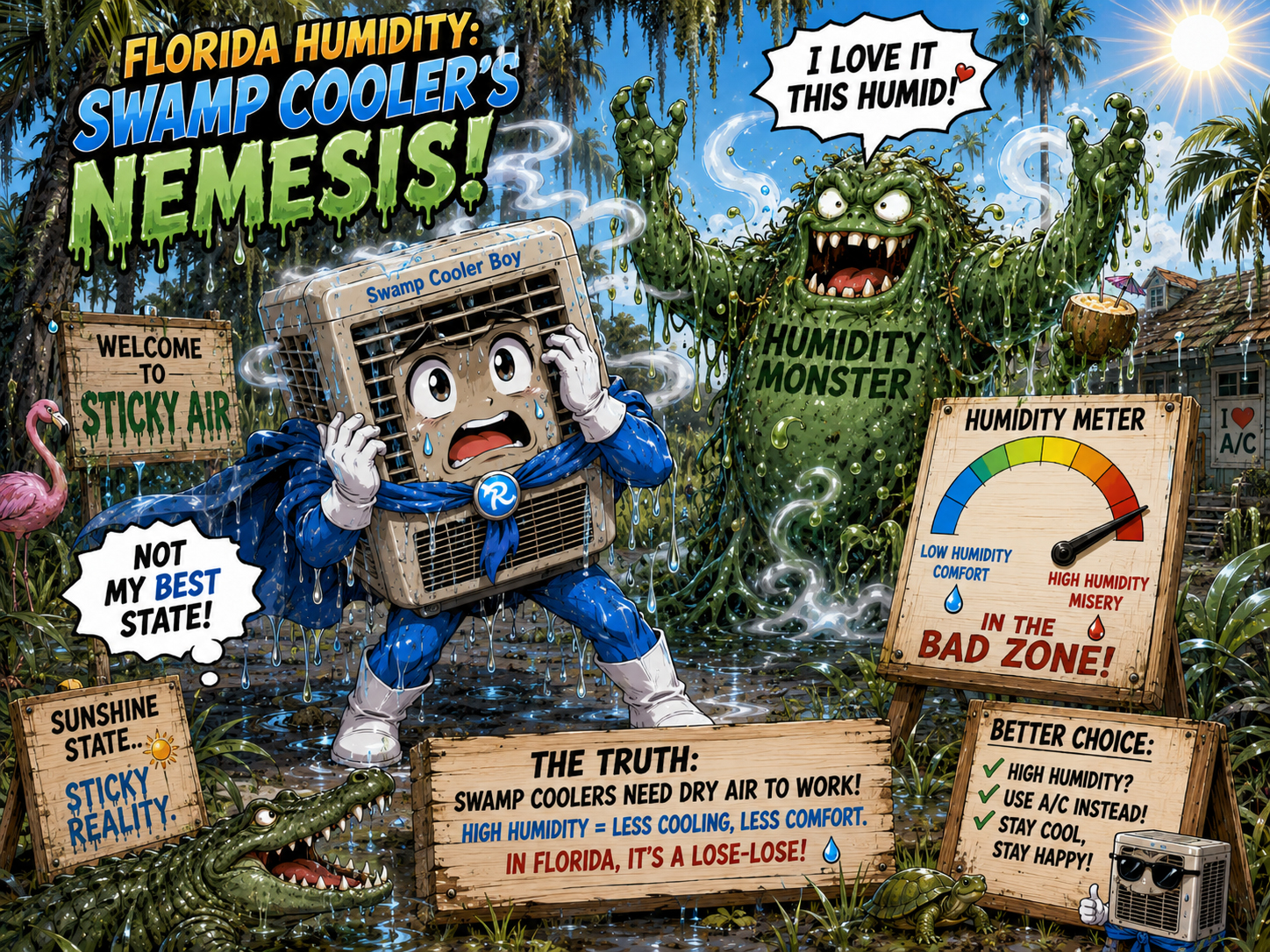
Florida humidity comedy scene where Humidity Monster defeats Swamp Cooler Boy.

Poor-fit climates

These are usually Humidity Monster zones.

The exact answer depends on local conditions, but the pattern is easy: warm and wet air is bad for swamp coolers. Hot and dry air is good.

Florida

Florida is the comedy poster child. Tropical air, sticky summers, wet afternoons, and high moisture make evaporative cooling a poor fit for most comfort goals.

Sticky air High humidity Humidity Monster
Gulf Coast

Louisiana, coastal Texas, Mississippi, Alabama, and Gulf-influenced climates often have the kind of moisture-heavy air that defeats the evaporation advantage.

Moist air Stormy summers AC country

Humid Southeast

Many Southeast locations face hot conditions and high humidity at the same time. That is usually not the kind of air Swamp Cooler Boy wants to fight.

Wet heat Low evaporation Poor comfort
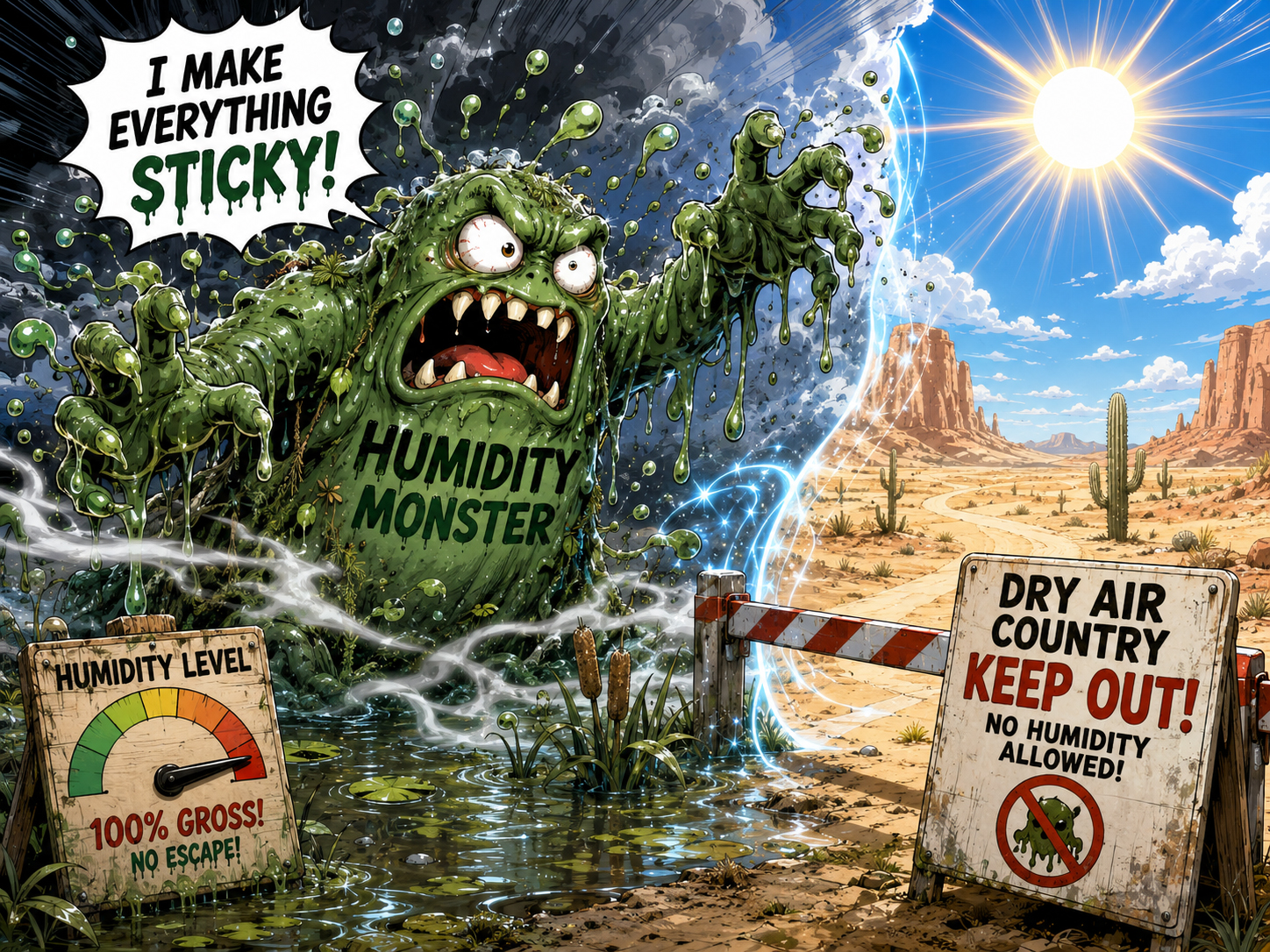
Humidity Monster character representing sticky wet air.

Meet the villain

Humidity Monster makes everything sticky.

Humidity Monster is not just a joke character. He is the physics problem in costume. When air is already wet, evaporation cannot do its best work.

That is why the site needs a warning page. The wrong equipment in the wrong climate creates disappointment, extra moisture, and a homeowner who says: “Why does my cooling system feel like a wet towel?”

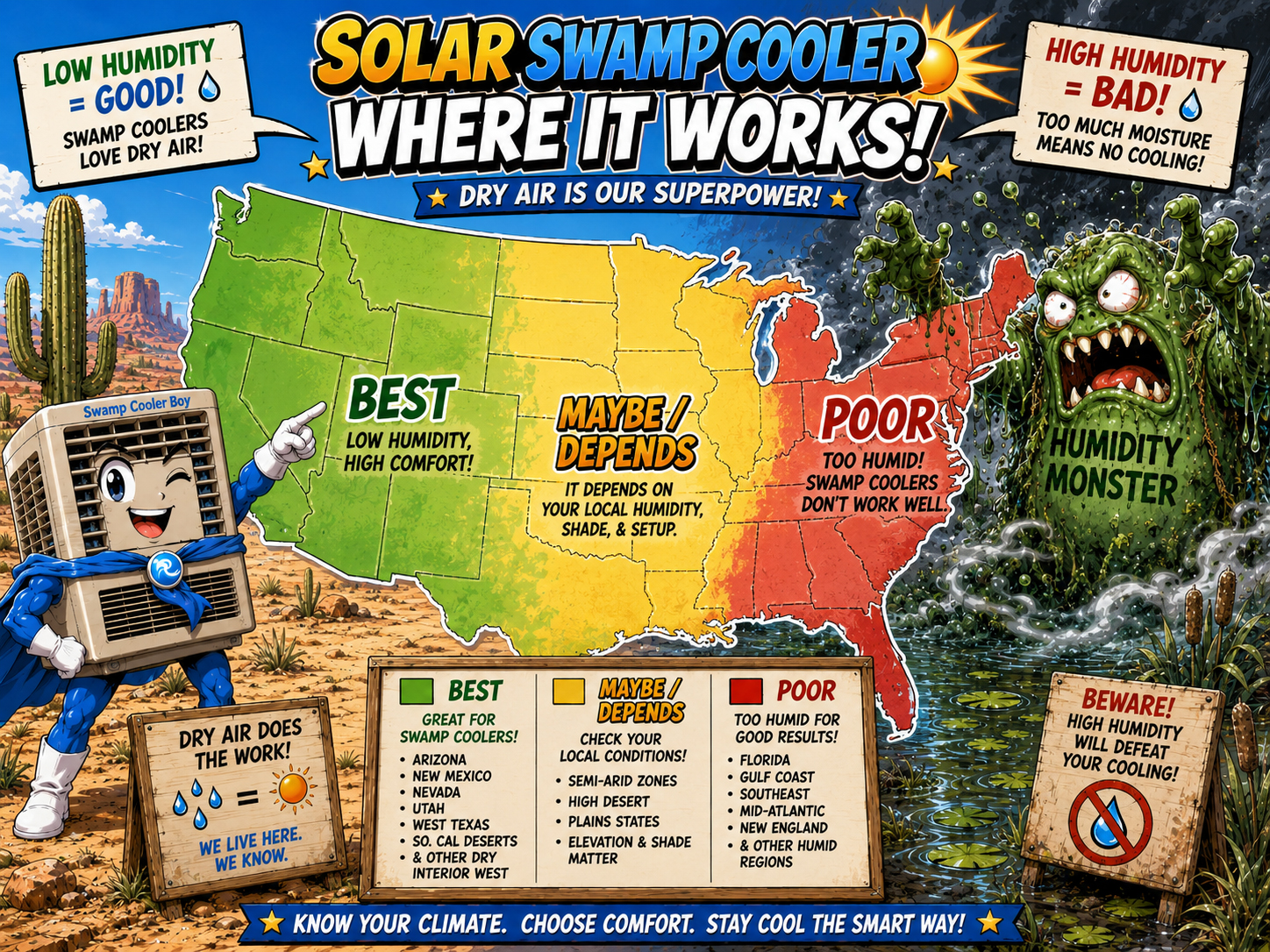
Map showing best, maybe, and poor swamp cooler climate zones.

Map warning

Red zones need caution.

A map is not a final engineering answer, but it is a strong first filter. If your region is humid most of the cooling season, a swamp cooler is probably not the right main comfort tool.

  • Do not rely only on state names.
  • Check local summer humidity patterns.
  • Consider indoor comfort expectations.
  • Ask whether added moisture helps or hurts.
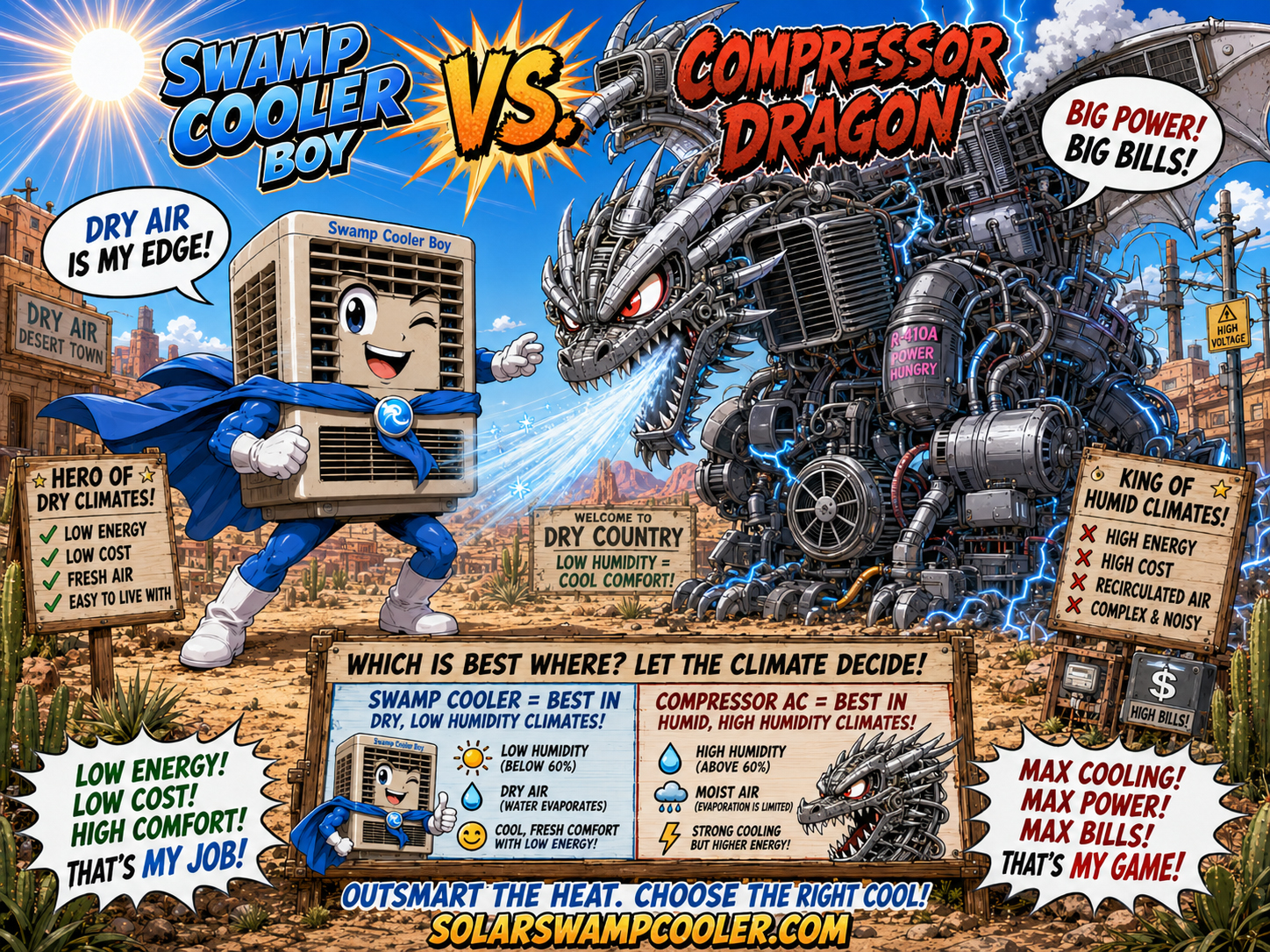
Compressor Dragon versus Swamp Cooler Boy comic comparison.

Right tool, right climate

Sometimes Compressor Dragon wins.

Compressor air conditioning is the heavyweight tool for humid climates. It can remove heat and manage moisture in ways an evaporative cooler cannot. The dragon may be expensive, but in sticky air he has the advantage.

  • Humid climates often need refrigerated cooling.
  • Moisture control is part of comfort.
  • Swamp coolers are climate-specific, not universal.

The wrong-way checklist

Warning signs that a swamp cooler may be a bad idea.

This is the page to read before someone buys a swamp cooler because the word “cooler” sounded good and the climate question got skipped.

Sticky summer air

If the cooling season feels muggy, damp, and heavy, evaporation has less room to work.

Closed-house comfort

If the homeowner wants sealed-window refrigerated comfort, a swamp cooler is the wrong personality.

Moisture concerns

If added indoor humidity would create problems, do not invite Humidity Monster inside.

Mixed climate doubt

If the area is borderline, check actual local humidity, not just a salesperson’s enthusiasm.

Florida failure comedy

“Not my best state!”

The Florida image tells the whole story in one glance: palms, wet air, a delighted Humidity Monster, and Swamp Cooler Boy having a very bad day.

That is not anti-Florida. It is pro-truth. Florida has its own cooling logic, and evaporative swamp cooling is usually not the star of that show.

  • High humidity means less evaporation.
  • Less evaporation means less cooling.
  • More moisture can mean less comfort.
  • The right system should match the climate.
Swamp Cooler Boy overwhelmed in Florida humidity while Humidity Monster celebrates.
Climate clue What it means Comic character Practical result
Hot and dry Air has room to absorb moisture. Swamp Cooler Boy smiles. Evaporative cooling may work well with proper setup.
Hot and humid Air is already moisture-heavy. Humidity Monster dances. Swamp cooler performance is usually poor.
Mixed or seasonal Some days may work, some days may not. Dry Air Sensei asks questions. Check local humidity, expectations, and backup cooling needs.
Sealed-window AC expectations Evaporative cooling needs airflow through the home. Desert Grandma opens the window. Wrong expectations can create disappointment.

This page is educational and comedic. Actual cooling performance depends on local weather, equipment sizing, ventilation, water quality, building design, installation quality, maintenance, and homeowner comfort goals.

The honest conclusion

A swamp cooler is not bad. A swamp cooler in the wrong climate is bad.

In dry country, Swamp Cooler Boy can be a hero. In humid country, he needs to step aside and let the right cooling tool do the job.